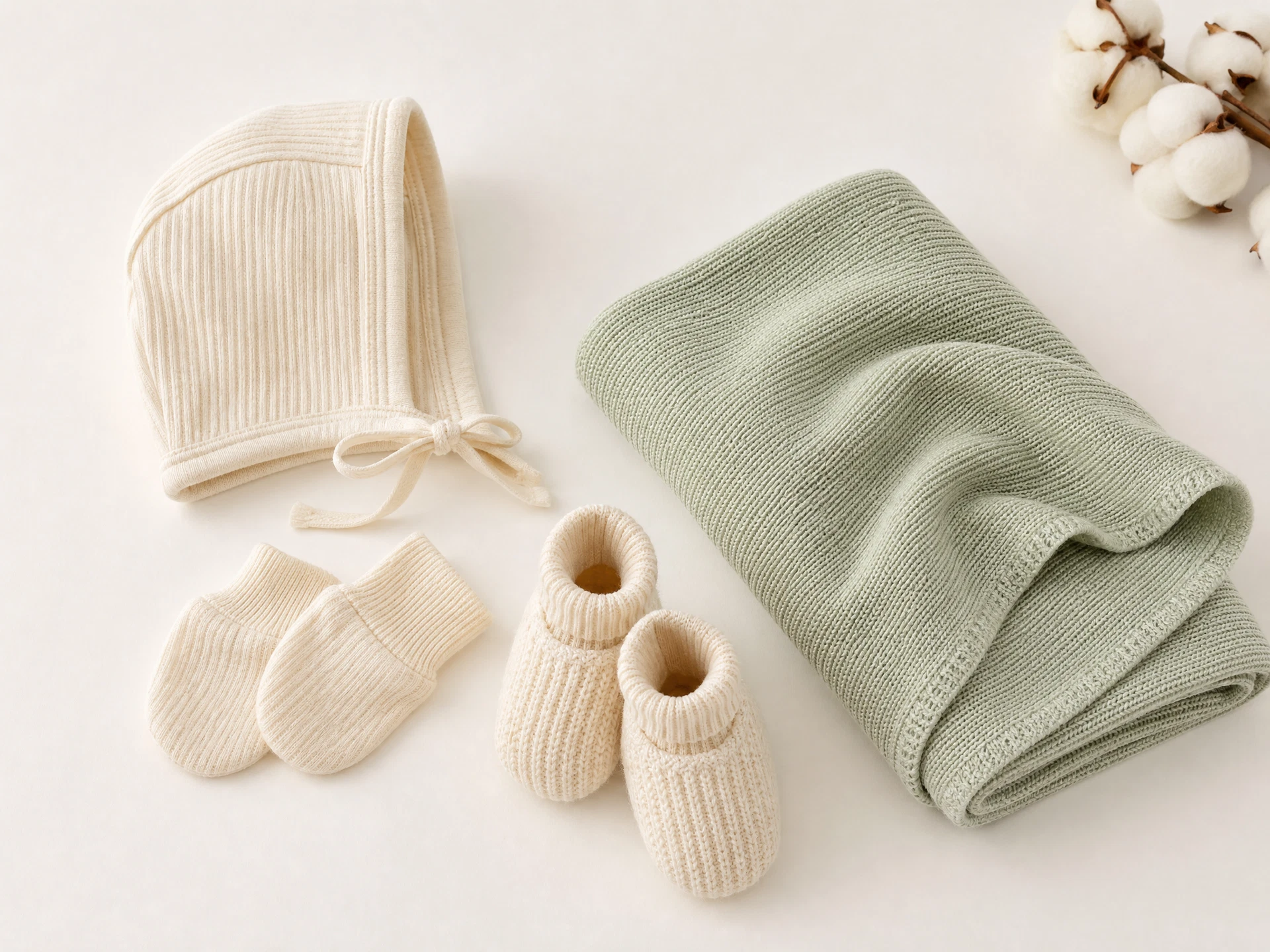
# Organic Baby Accessories: A Buyer Safety and Documentation Checklist
Developing baby accessories requires a careful balance of softness, practical use, product safety and credible material communication. Buyers planning hats, mittens, booties, blankets or gift sets should start by defining the product category, age range, material route and retail claim. The goal is not simply to add an organic message. The goal is to build a product and documentation process that supports the claim the brand intends to make.
Hunan Tongmei Garment Co., Ltd can support product requirement discussions, material and sample communication, and production-stage quality coordination. Buyers should confirm applicable standards, certification requirements and market-specific obligations with the relevant authorities and certification bodies.
Define the Product and Age Range
A newborn bonnet, a toddler sun hat and a knitted blanket can have different fit, component and care considerations. State the age range and intended use in the brief. This helps the development team assess size, closure options, small-part risk, label placement and packaging direction.
| Buyer checkpoint | What to define | Why it matters |
|---|---|---|
| Product type | Hat, mitten, bootie, blanket or gift set | Determines construction and review points |
| Age range | Newborn, infant or toddler | Guides fit and component choices |
| Material route | Organic cotton, wool blend or other option | Shapes documentation and care discussion |
| Intended claim | Material claim, certification claim or no claim | Prevents unsupported packaging wording |
| Market | Target country or retailer | Helps identify requirements to confirm |
Plan Material and Claims Together
If a collection will use organic fibre or certification language, discuss the intended claim before yarn or fabric is confirmed. Ask which documents relate to the exact material and processing route. A certificate held elsewhere in a supply chain does not automatically support every finished-product claim. Build time into the development calendar to review composition, documentation and packaging wording together.
For related product directions, explore Baby accessories and Knitted blankets.
Design for Comfort and Practical Care
Baby accessories are frequently handled and washed, so buyers should review seam placement, softness, stretch recovery, edge construction and care instructions. Flat or low-profile seams can be considered where skin comfort is important. Product samples should be reviewed after the expected care process, not only when new.
Review Components and Decoration
Decorative ears, pom-poms, buttons, embroidery, labels and ties should be assessed according to the target product category and market. Use the sample stage to clarify how components are attached, whether they remain suitable after care and how the intended age group will use the item. If there is uncertainty, simplify the design and confirm the relevant market requirements before production.
Keep a Documentation Folder
A simple shared folder can make a programme easier to manage. Include the approved tech pack, composition, colour standard, sample feedback, packaging artwork, care-label draft and the relevant supplier or material documents. Agree who is responsible for reviewing each item before a purchase order is released.
Build a Safer Gift Set Brief
Gift sets add packaging and presentation requirements. Confirm how each item is fixed in the box, whether the material can be compressed, how labels will be seen by the consumer and whether the set contains any accessories that should be separately reviewed. A clear packing sample can prevent last-minute changes after bulk production begins.
Next Step for Buyers
Share your product type, age range, target market, material preference and intended claim through Contact our team. We can help outline the development questions for a more structured sample discussion. For matching seasonal ranges, also review Custom knitted hats and Custom scarves.
Found this sourcing guide useful? Share it with your product development, buying, or supply-chain team.