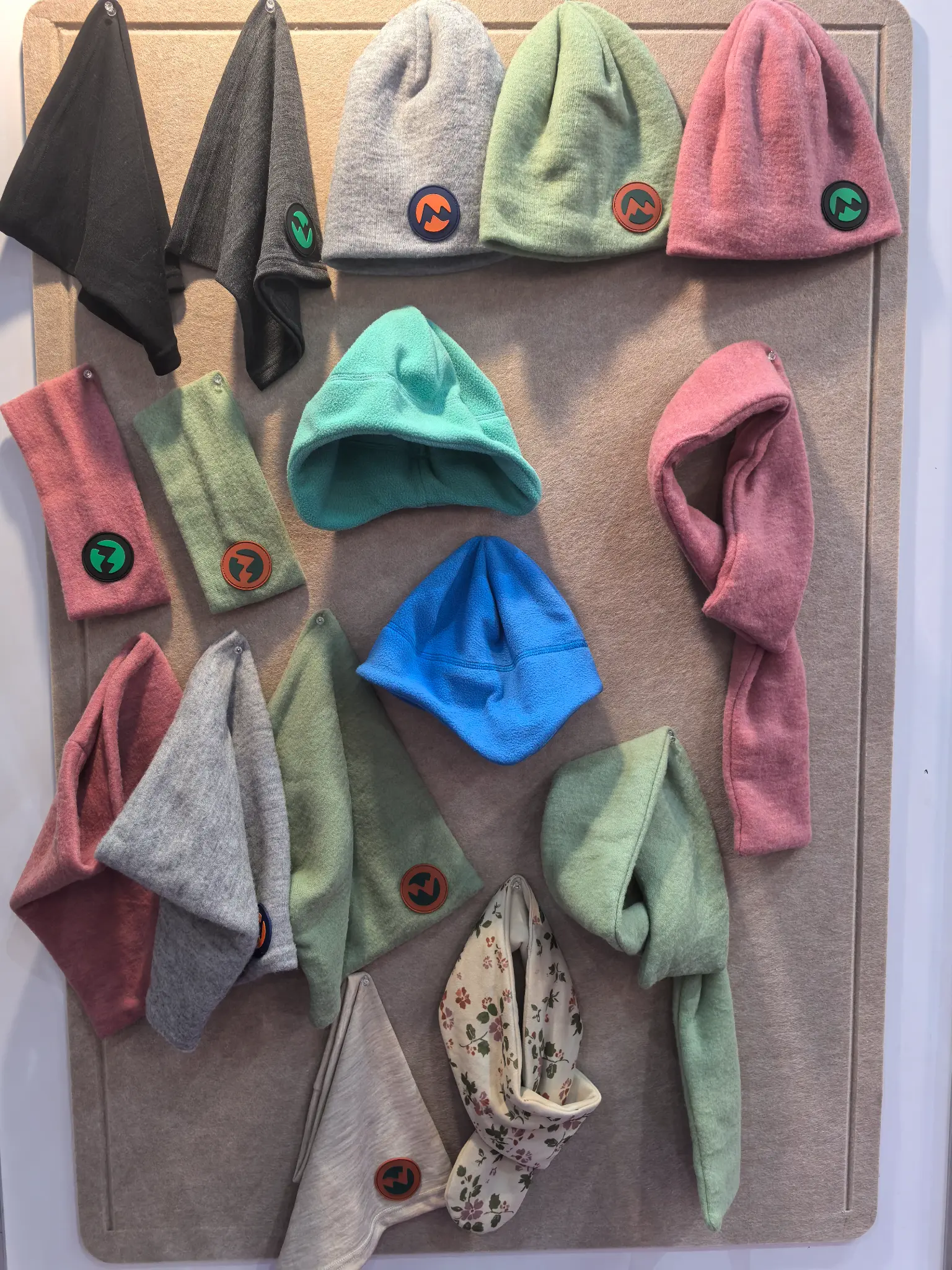
Soft headwear often looks simple on a mood board, but a coordinated beanie, headband, hood or neck accessory can each need a different fit, construction and finishing decision. The most useful starting point is not a promise about a finished product. It is a clear brief that lets a buyer compare options and identify what must be confirmed.
Image note: This sample-board photograph was supplied by the Best Link team. It shows headwear and neck-accessory development samples in several shapes and colours. Treat it as a visual discussion aid only: materials, colours, dimensions, branding, labels and market requirements are confirmed for each buyer brief.
1. Start with the wear occasion, then select the shape
A range works more clearly when every item has a job. Start by describing the wearer, use moment and desired coverage before deciding on a silhouette.
| Brief question | Possible direction | What to define next |
|---|---|---|
| What part of the head or neck needs coverage? | Beanie, ear warmer, wrap headband, triangular neck accessory, hood | Coverage, fit and wearing position |
| Is the item a core repeat or a seasonal accent? | Essential neutral, colour accent, print or texture option | Colour plan and range role |
| Should products work as a set? | Matching beanie and headband, coordinated neck accessory | Shared yarn, colour and trim rules |
| How will it be worn or displayed? | Folded, hung, tied, layered or packed | Shape retention, presentation and packaging questions |
Using this order keeps the range buyer-led. A beanie may need crown depth and cuff proportion; a headband may need width, overlap and ear coverage; a neck accessory may need its folding or tying method defined. These are separate questions even when the products share a colour family.
2. Make each item specific enough to sample
A good brief does not have to be long, but it should remove ambiguity. For each selected format, record the construction details that a sample review needs.
### Beanies and soft caps
- Desired crown height, width and overall fit reference - Cuff type: no cuff, turn-up cuff or another defined edge treatment - Seam, panel or knit construction reference - Label or brand-artwork location, only where approved artwork and placement are supplied - Colour reference and acceptable variation process
### Headbands and ear warmers
- Finished width and the intended coverage area - Flat, crossed, knotted or other defined front treatment - Stretch, recovery and comfort checks to discuss during sampling - Edge construction and any visible seam placement - Whether the item is designed to coordinate with another style
### Neck warmers, triangular accessories and soft hoods
- Intended wear modes: tied, wrapped, pulled over, layered or another specified use - Neck opening, length and coverage reference - Shape retention and finishing expectations - Printed, plain or textured surface direction - A reference for how the item should be folded or packed
3. Describe material intent without assuming the answer
Material names alone do not define the result. A more useful brief describes the hand feel, weight, texture and care expectations the buyer wants to evaluate. For example, note whether the desired direction is smooth or brushed, compact or airy, structured or draped, and whether a lining or a reversible construction is under consideration.
Ask the sourcing conversation to confirm:
- Composition options that are appropriate to the requested look and use;
- Weight and structure needed for the selected shape;
- Colour-development route, including the reference standard to use;
- Care, labelling, testing and documentation questions for the destination market; and
- Any claim, certification or logo requirement before it appears on an item or sales material.
This keeps a mood-board direction separate from facts that need verification. It also avoids turning an early material preference into an unsupported product claim.
4. Review the sample as a range, not only as individual pieces
When samples are ready to discuss, compare them side by side. A small sample board can reveal whether the colour scale, surface texture and trim language read as one collection. It can also help identify which details should remain consistent and where a contrast is useful.
Use the following review prompts:
- Does each style have a clear purpose within the range? - Are the selected forms recognisably related without becoming identical? - Is the requested fit reference clear enough for the next revision? - Is any logo, label or artwork supplied in approved form with a defined position? - Are the packaging, marking and destination-market questions recorded for confirmation?
5. Include these items in the buyer brief
Before asking for a sourcing direction, provide as many of the following as are available:
- Target market and retail season - Product formats and reference images - Intended wearer and fit preference - Material feel, texture and colour direction - Brand-artwork, label and packaging references where relevant - Approximate quantity and target cost position, if shareable - Sample decision date and launch context - Documentation, testing or labelling questions to confirm for the destination
The aim is clarity, not false precision. Unknown details can be marked as open questions so they are resolved with the right product, supplier and market context.
One brief. More product directions.
A coordinated headwear program can begin with one structured conversation, then branch into beanies, headbands and hair accessories, knitted hats or matching soft accessories. Best Link uses the buyer brief to organise the sourcing discussion; availability, materials, commercial terms and market requirements are confirmed for the specific request.
Share a buyer brief to begin with the product direction, target market and retail season you have in mind.
Found this sourcing guide useful? Share it with your product development, buying, or supply-chain team.