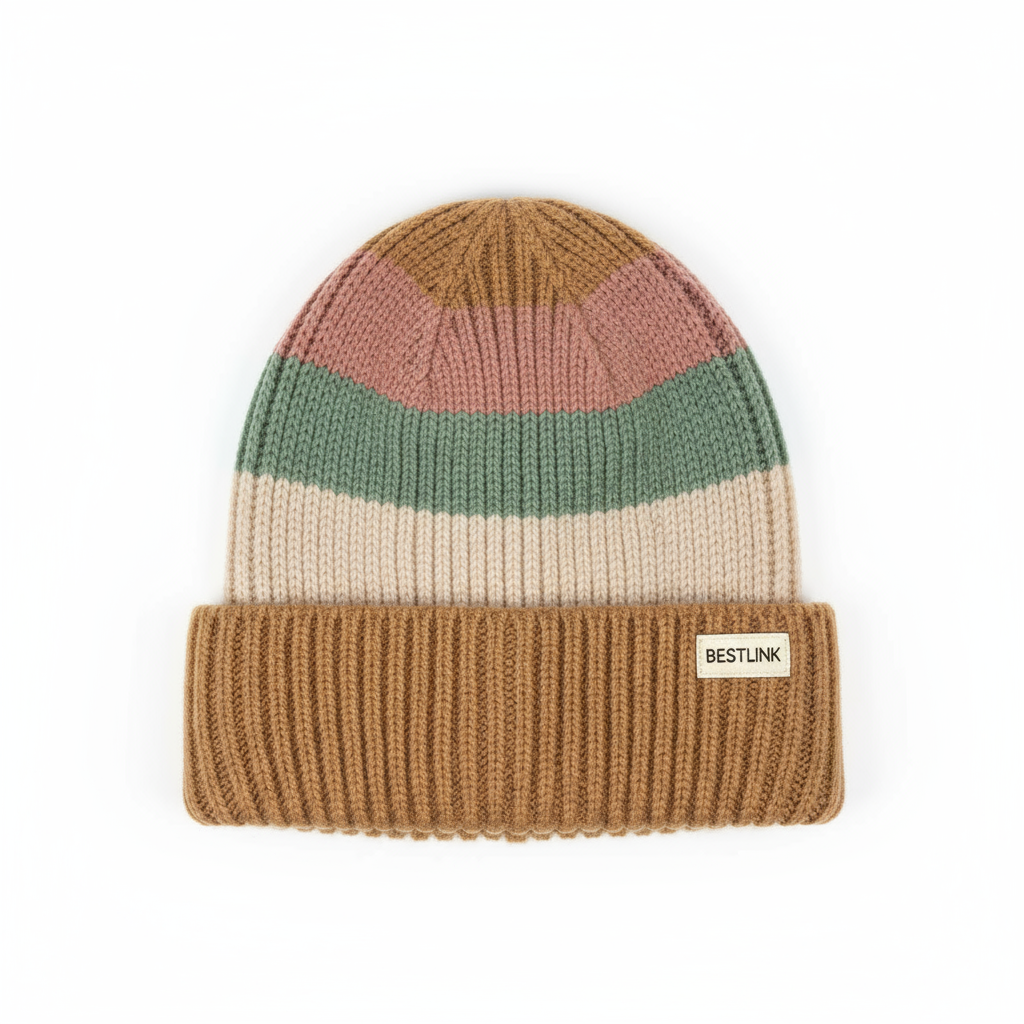
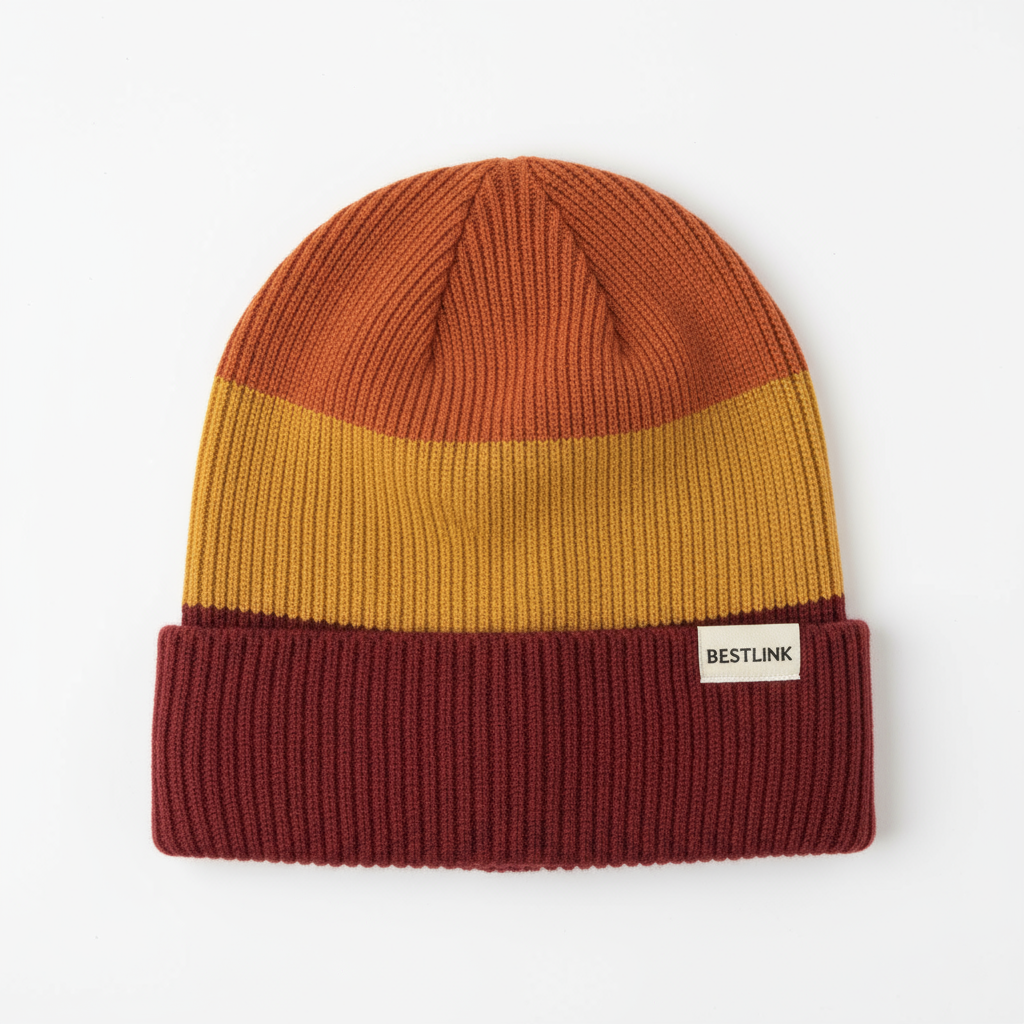
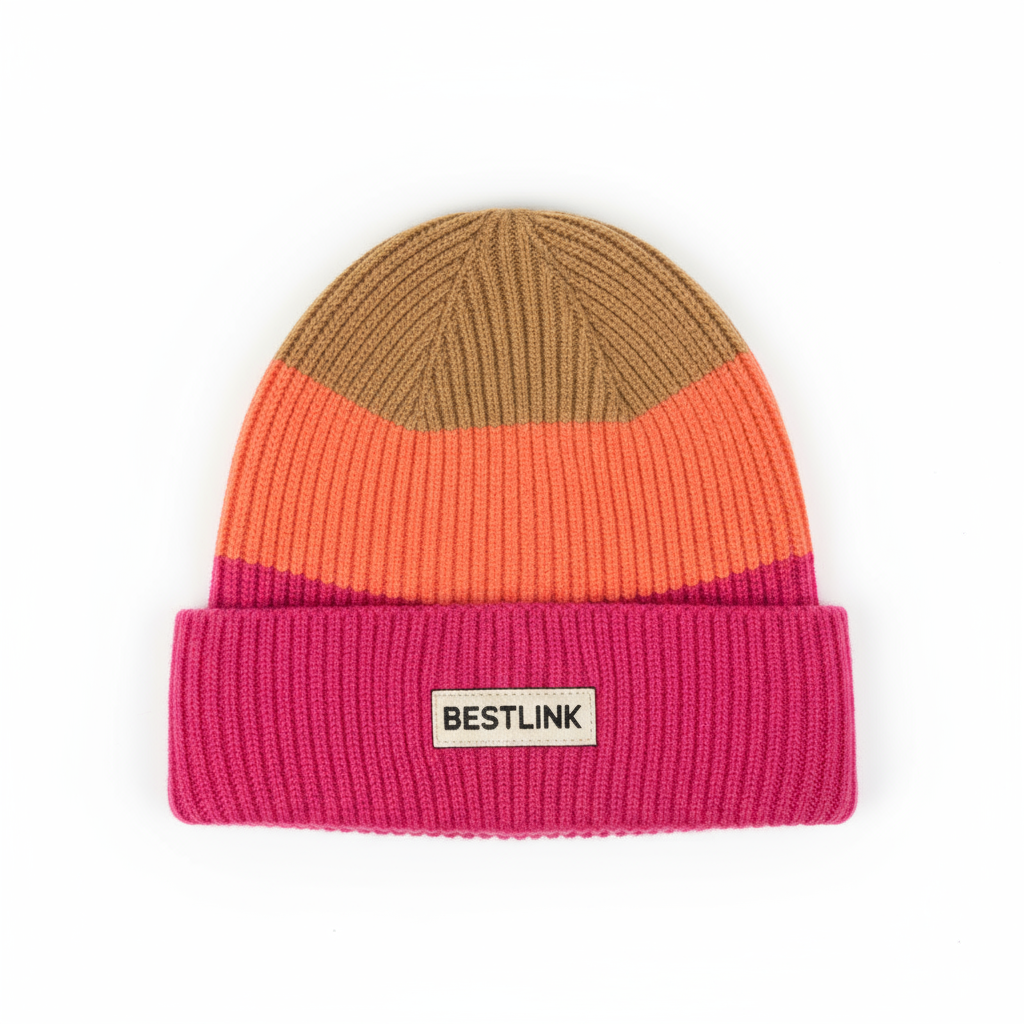
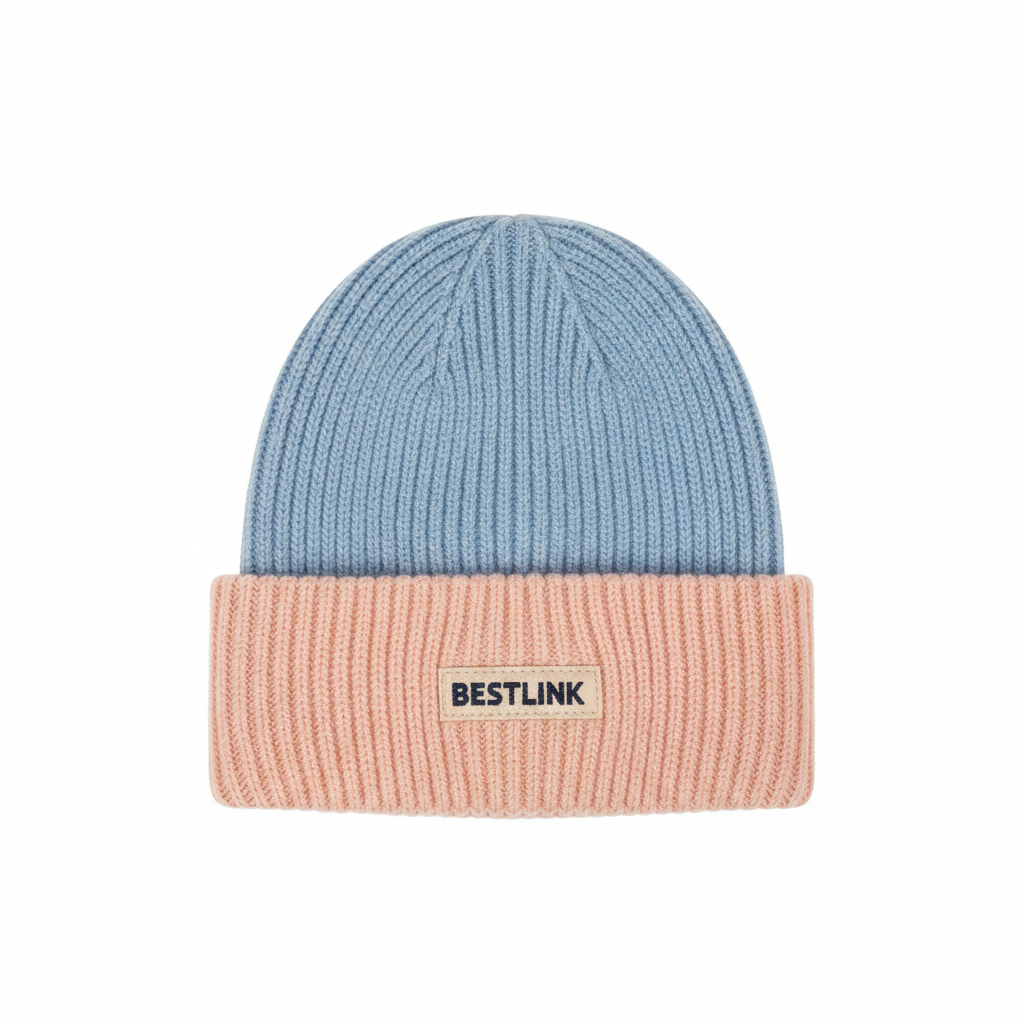
Image note: The four studio product photographs in this guide were supplied by the Best Link team. They illustrate color-block knit beanie directions and label-placement ideas. They are visual references only; fibre composition, dimensions, colors, labels, packaging, commercial terms, testing and destination-market requirements are confirmed for each buyer brief.
A color-block beanie looks straightforward at first glance, yet the final impression depends on choices that should be recorded before a sample is reviewed: the order of color bands, the proportion of the crown and cuff, the knit texture, the label position and how the style works within a wider range. A clear brief makes those decisions easier to compare without treating an early visual reference as a finished specification.
1. Start with the range role, not only the colors
The supplied references show four different directions: muted earthy bands, warm rust-and-mustard contrast, a bright pink accent and a quiet two-tone option. Each can serve a different purpose in a collection. First decide whether the beanie is intended as a core neutral, a seasonal color statement, a coordinating accessory or a limited contrast style. That decision informs how many colors need to be shown and how closely the cuff should relate to the crown.
| Buyer-brief question | What to describe | What to confirm during sampling |
|---|---|---|
| What is the range role? | Core option, seasonal accent or coordinated set | How the selected colors sit beside related scarves, gloves or outerwear |
| How should the bands read? | Color order and the number of visible blocks | Band height, curve/transition position and acceptable variation process |
| Where should the contrast sit? | Crown, mid-section, cuff or label detail | Whether the contrast supports the intended wear and retail presentation |
| Is a two-tone option needed? | Main body color and cuff color | Whether a simpler color story works alongside the multi-block choices |
2. Define the silhouette and folded cuff together
The crown height, overall width and cuff depth should be discussed as one set of choices. A taller crown can create a relaxed look; a closer crown reads differently when worn; and the same body can feel more or less substantial depending on the folded cuff. Rather than naming a fit as fixed, use a visual reference plus the intended wearer and wearing position to guide the discussion.
For the cuff, describe the preferred depth, whether the fold is meant to stay visible, and whether the label should sit on the folded area. Confirm the finished proportions and stretch/recovery expectations with the sample rather than assuming them from a photograph.
3. Make the knit texture part of the brief
The pictures show a ribbed appearance, but the brief should state what the buyer wants to evaluate: a fine or more pronounced rib, a compact or softer hand feel, a smooth or more textured surface, and whether the same construction should continue from crown to cuff. These are useful starting points for a technical conversation, not material or performance claims.
A material direction is clearer when it includes desired feel, warmth impression, weight, care expectations and the destination-market questions that still need confirmation. If a fibre-content, organic, recycled or other certification claim may be used, it should be documented and verified for the exact proposed material before it appears on the product or sales material.
4. Treat the label as a placement decision
The references place a woven-style label on the cuff in different positions. Before sampling, record whether the label is centered, offset or omitted; the intended label size; the required artwork source; and any visible border, backing or stitching preference. The BESTLINK marks shown in the supplied images are visual placement references only. Use approved artwork and buyer instructions for any production label or private-label application.
5. Review four questions side by side
When the first sample direction is ready, compare the color-block alternatives as a small range instead of judging only one beanie at a time.
- Does the color order match the intended collection role and target retail season?
- Do crown height and cuff proportion create the desired wearing impression?
- Is the rib texture and finish consistent with the agreed material direction?
- Is label artwork, placement and attachment method defined from approved files?
This review method helps separate aesthetic decisions from facts that require technical, commercial or market confirmation.
6. What to include in the buyer brief
For a more focused sourcing conversation, share the following where available:
- Target market, retail season and intended wearer;
- Color references, preferred band order and examples of the range context;
- Desired beanie silhouette, cuff treatment and fit references;
- Material feel, construction and care direction to discuss;
- Approved label artwork, placement notes and packaging references; and
- Approximate quantity, timing, documentation, testing or labeling questions for confirmation.
A single structured brief can guide several color-block directions, then help narrow the range based on the actual sample review. Explore the knitted hats sourcing direction or share a buyer brief with the product details you already have. Best Link will confirm the applicable materials, commercial terms and market requirements for the specific request.
Found this sourcing guide useful? Share it with your product development, buying, or supply-chain team.