# Knitted Blanket Manufacturer Guide: Yarn, Size, MOQ and Gift Packaging
A knitted blanket can serve several markets at once: home décor, gifting, travel, baby essentials and seasonal retail. The development process becomes more reliable when buyers define the intended use before selecting a pattern. Yarn, blanket weight, dimensions, edge finishing and packaging all influence how the final product feels, photographs and travels through the supply chain.
Hunan Tongmei Garment Co., Ltd can support buyer discussions around product requirements, samples, production confirmation and quality communication for knit accessory and textile programmes.
Start With the Use Case
A small baby blanket, a couch throw and a large bedding layer may use different construction, yarn and packing methods. Consider who will use the product, whether it is a gift item, how it will be folded for retail and how frequently it may be washed. These choices should guide the first design brief.
| Use case | Useful development focus | Buyer question |
|---|---|---|
| Baby blanket | Softness, dimensions and care | What material and construction suit the intended age group? |
| Home throw | Texture and styling | Does the pattern show well when folded or draped? |
| Gift programme | Packaging and presentation | Can the product be packed without crushing the texture? |
| Seasonal retail | Colour and replenishment planning | Which colours can support a coordinated collection? |
Choose Yarn for Hand Feel and Care
Yarn selection affects the weight, drape, softness and care direction of a blanket. Wool, cotton, acrylic and blend options each create different development questions. A buyer should define the desired hand feel and care expectation, then request a material swatch or sample before deciding. If a collection includes organic or recycled claims, confirm the documentation path and allowable product wording with relevant supply-chain partners.
See current product ideas on Knitted blankets.
Select a Construction That Fits the Pattern
Cable, waffle, herringbone, rib and jacquard structures can create different visual and tactile results. A complex pattern should be evaluated at full scale because a small swatch may not show how the repeat looks across the finished blanket. Ask for the proposed gauge, pattern repeat and any finishing process that affects the final dimensions.
Define Dimensions and Tolerance
A clear size specification is especially important for blankets because shrinkage, finishing and knit stretch can affect the finished measurements. State the target dimensions, acceptable tolerance, intended folding method and any retail packaging size. This allows a sample to be reviewed against a realistic commercial requirement rather than an approximate visual reference.
Plan Edge Finishing and Packaging Together
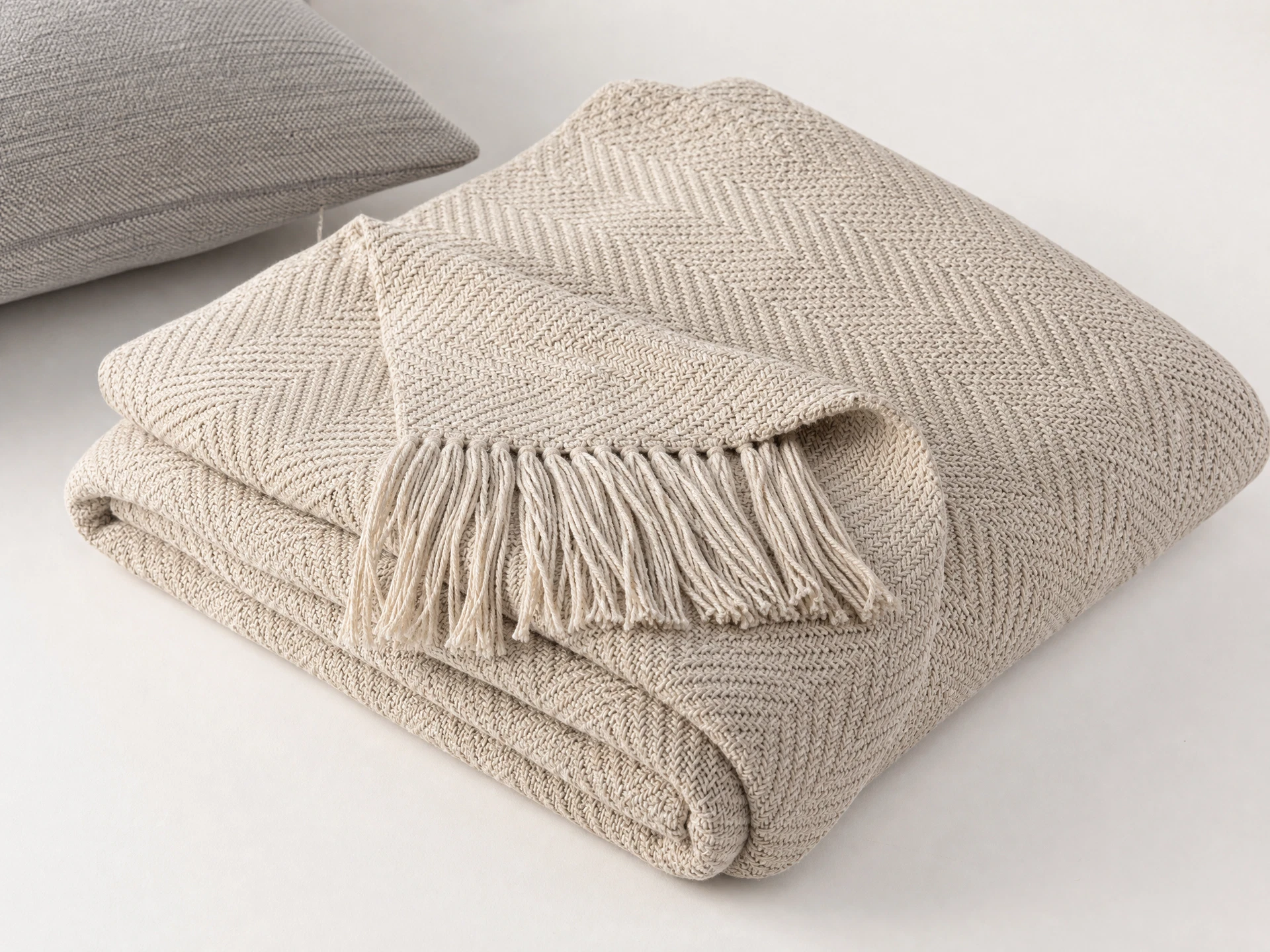
Fringe, tassels, pom-pom borders, clean hems and rib edges all change how a blanket should be packed. For gift programmes, buyers may consider belly bands, ribbon rolls, tissue wrap or boxes. The package should protect the product while allowing the texture and colour to be seen. Request a packing sample when presentation is central to the collection.
Discuss MOQ as a Product Mix Decision
MOQ may change according to yarn availability, colour count, pattern complexity, packaging and the number of dimensions in the range. Share the wider collection plan rather than only one style. A supplier may be able to suggest ways to group colour or material decisions for a more manageable first launch.
Next Step for Buyers
Send your target size, material direction, reference image, intended market and packaging preference to Contact our team. For a coordinated gift offer, review Baby accessories, Custom scarves and Custom knitted hats.
Found this sourcing guide useful? Share it with your product development, buying, or supply-chain team.