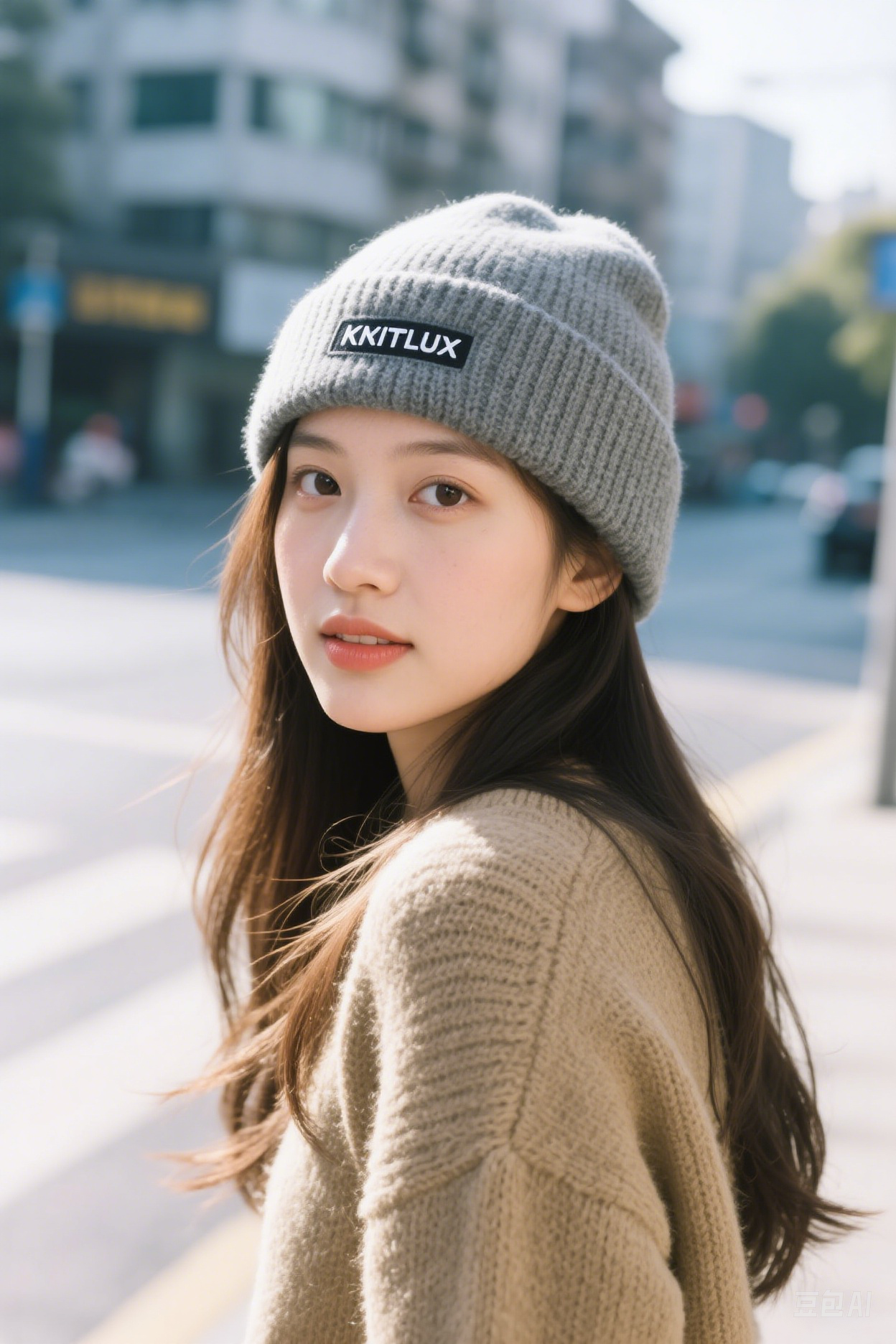
Image note: This portrait was supplied by the Best Link team. It shows a grey rib-knit beanie with a KNITLUX cuff patch as a visual direction. It is not a product specification or a claim about fibre composition, dimensions, labeling, packaging, availability, commercial terms, testing or destination-market requirements. Those details are confirmed for each buyer brief.
A small accessory with a strong point of view
I love knit beanies because they make an immediate visual statement with very few components. A crown, a rib structure, a turn-up cuff and one small label can make an accessory feel quiet and refined, bright and youthful, technical, outdoors-led or gift-ready. The result is simple to wear, but it is not simple to brief.
The supplied KNITLUX image is a useful starting point. The soft grey color, vertical rib, relaxed crown and compact dark patch create a clean contrast. It shows why a beanie can be a strong first item in a winter-accessory story: buyers can test a color, a texture and a brand-treatment idea in one focused product.
A good brief does not attempt to turn that visual reaction into a promise. It turns “I love this beanie” into a short list of decisions that can be discussed, sampled and confirmed.
The 140th Canton Fair context
The official Canton Fair website lists the 140th Canton Fair in three phases: October 15–19, October 23–27 and October 31–November 4, 2026. The fair is a timely search context for buyers reviewing product directions, meeting suppliers or refining a new-season brief. Check the official 140th Canton Fair schedule.
This is an independent buyer note published around the 140th Canton Fair. It does not state that Tonglu Best Link is exhibiting, attending or holding a booth. For exhibitor information, buyer registration and event arrangements, use the official Canton Fair channels.
For a knit-beanie buyer, the useful question is not only “What looks new?” It is “Which visual choices are important enough to record before a sample discussion?” The answer usually starts with the four decisions below.
1. Start with the silhouette
A beanie can sit close to the head, carry a little more crown volume or fold into a shorter cuffed silhouette. These are different visual directions, not just size choices. A reference image helps explain the intended mood, but the buyer brief should still identify the wearer, the desired coverage and the fit reference to evaluate during sampling.
Record whether the design should read as compact, relaxed, tall-crowned or close-fitting. Note whether a turn-up cuff is essential or optional. Then confirm finished dimensions, stretch and recovery expectations with the proposed sample rather than assuming them from the image.
2. Use rib texture to set the surface character
The grey beanie in the supplied image uses a vertical rib appearance. Rib can make a small accessory look more structured, while other knit directions can appear smoother, softer or more textured. The design brief should describe the visual and tactile direction the buyer wants to evaluate, not declare an unverified material or performance result.
Useful questions include whether the surface should feel compact or airy, how visible the ribs should be, whether the cuff uses the same knit direction as the crown and whether a contrast edge is wanted. Material options, finished hand feel, care instructions and any supporting documentation should be confirmed against the actual proposed product and target market.
3. Treat the cuff and label as one design decision
A cuff is both a proportion choice and a branding surface. In the image, the dark KNITLUX patch brings the eye to the turn-up section. For a private-label beanie, the buyer should decide whether the label is centered, offset, woven, printed, embossed or omitted. The latest approved artwork and placement notes are needed before any brand execution is confirmed.
It is useful to state what the label needs to achieve: quiet recognition, a high-contrast signature, a seasonal color detail or simply an identification requirement. Label dimensions, attachment method, backing, edge treatment and approved wording all belong in the sampling conversation.
4. Build a beanie range, not only one hero color
One good beanie can open several related directions. A neutral grey can act as a core reference. A second color can become a seasonal accent. A third direction can explore a contrast cuff, a color block or an alternate patch treatment. This range view makes it easier to decide which elements should stay consistent and which elements can change.
For inspiration on multi-color direction, see the color-block knit beanie buyer brief. For a broader headwear brief that includes coordinating accessories, see beanies, headbands and neck warmers.
From “I love it” to a workable buyer brief
Bring the visual response into a sourcing conversation with these practical inputs:
- Target market and retail season. State where the item will be sold and the role it should play in the range.
- Wearer and fit direction. Share the intended wearer, coverage preference and reference images.
- Color story. Mark core colors, seasonal accents and any related products that need to coordinate.
- Knit appearance. Describe the rib, surface texture, crown and cuff direction to be evaluated.
- Branding materials. Provide approved label artwork, position and packaging references if brand execution is required.
- Open questions. Note which details need a proposal or confirmation, including material options, quantities, target dates, documentation, testing and commercial terms.
This approach creates clarity without inventing precision. It lets the buyer, product team and sourcing partner decide what matters first, then review the evidence and sample choices that apply to the exact program.
Search themes used responsibly
This article uses the phrases 140th Canton Fair, Canton Fair 2026, knit beanies, winter headwear, private-label beanies and headwear sourcing because they describe its real content. They are not a substitute for a clear product brief, and they should not imply event participation or product facts that have not been confirmed.
Explore knitted hats sourcing directions when you are comparing a beanie concept with related headwear. If you have a sketch, color reference, label artwork or target market in mind, share a buyer brief. One brief can turn a favorite beanie direction into a clearer sample and sourcing discussion.
Reference
Found this sourcing guide useful? Share it with your product development, buying, or supply-chain team.