# What We Took Away from Sourcing at MAGIC Las Vegas 2026: Three Directions for Knit Accessories
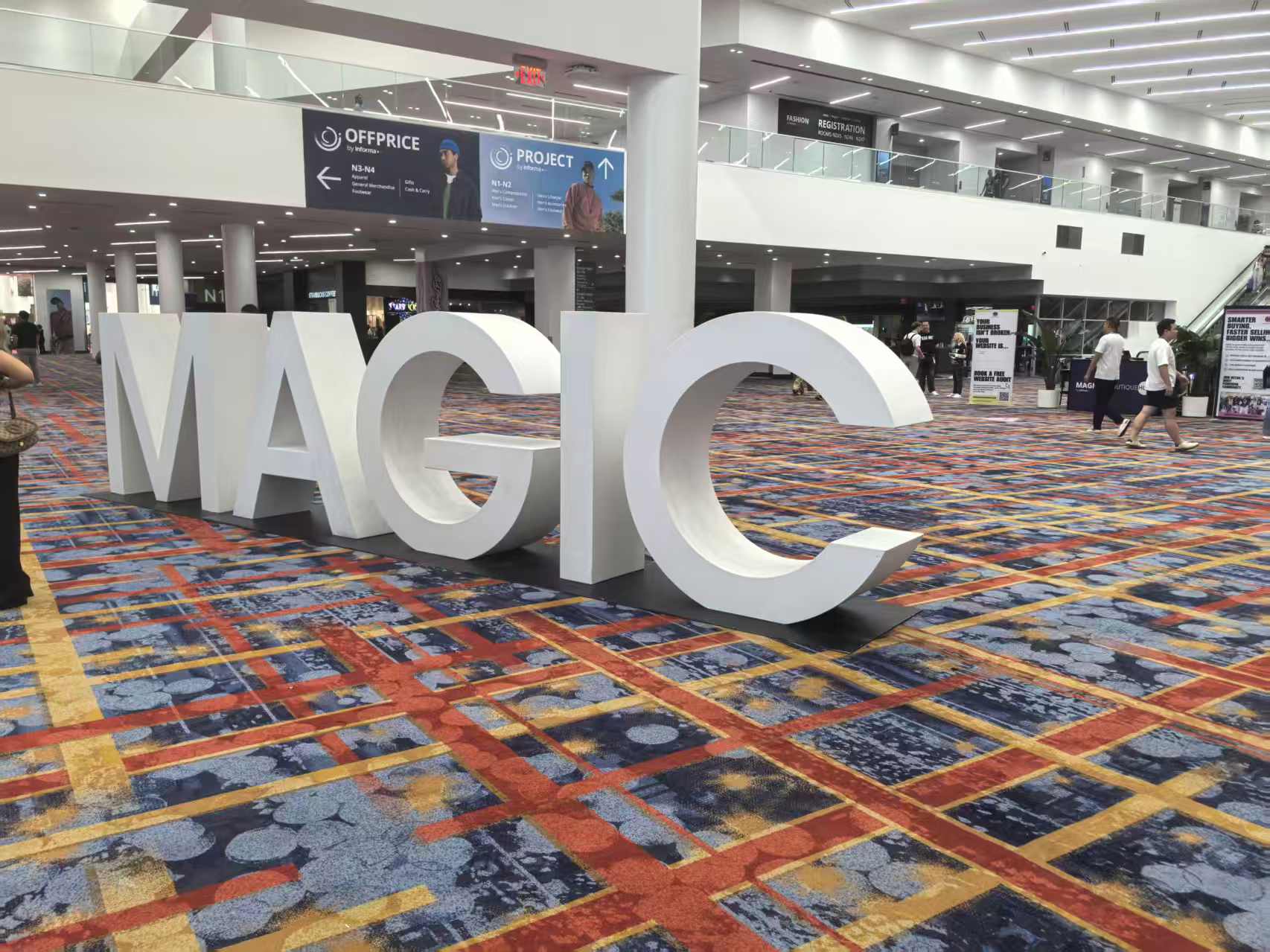
From August 10 to 12, 2026, the Las Vegas Convention Center brought together the broader MAGIC, PROJECT, OFFPRICE and SOURCING communities. Hunan Tongmei Garment Co., Ltd joined the SOURCING by Informa show floor as an exhibitor, using the three days to present knitted accessories, baby items and development capabilities to visitors from the fashion industry.
SOURCING by Informa positions its Las Vegas event as a platform for apparel manufacturers, accessories manufacturers, textiles and trims, sustainable solutions and fashion supply-chain services. That cross-category setting is valuable: it puts product design, sourcing decisions and production execution in the same conversation. [1]
This is not a universal trend forecast. It is our practical post-show framework for brands developing hats, scarves, gloves and baby accessories for future collections. Three directions stood out.
1. Product value starts with a material story
For knit accessories, the product conversation is no longer only about silhouette and colour. Buyers need a clear answer to a more complete question: what is the fibre, why was it selected, how does it feel, and what documentation supports the claim?
A well-developed beanie can still be commercially simple, but its specification should communicate more than a basic yarn composition. The right brief defines softness, warmth, stretch recovery, pilling expectations, care requirements and the intended price architecture. For baby accessories, comfort against the skin, safe construction and material traceability should be considered at the earliest stage.
For brands, the practical implication is to prepare a material hierarchy before sampling. Identify the one or two non-negotiable performance or sustainability attributes, then allow the manufacturer to propose yarn alternatives that protect the aesthetic and target cost. This keeps development focused and avoids late changes that add time without improving the product.
2. Small accessories deserve full product-development discipline
A hat, scarf or glove may be a compact item, but it still needs decisions on gauge, stitch structure, fit, labelling, branding method, colour matching and pack-out. These details determine whether a sample becomes a repeatable production style.
At the show, the most useful conversations were those that began with a specific commercial use case: a lightweight transitional beanie, a winter capsule with coordinated accessories, a baby gift set, or a logo-led private-label program. A clear use case lets the development team connect the right yarn, construction and finish to the target customer.
The better starting question is not simply “Can you make this?” It is “What must this product achieve for the customer, the retailer and the production line?” When those three perspectives are aligned, a manufacturer can advise on construction before the sample cycle begins.
3. Supply-chain confidence is built through clarity, not broad promises
Fashion sourcing is becoming more specific. Brands want to know who is responsible for development, where a product is made, how quality checkpoints are managed and which certifications apply to the intended material or factory. The right answer is a transparent process, not a generic claim.
For a knit-accessories program, a productive supplier conversation should cover:
| Topic | Question to resolve before sampling |
|---|---|
| Product development | Who converts the concept into a complete technical specification? |
| Materials | Which yarn options meet the desired hand feel, price and certification needs? |
| Sampling | What information is required for the first sample and how will revisions be recorded? |
| Production | Which factory capability is best suited to knitting or cut-and-sew components? |
| Quality control | Which measurements, appearance checks and packaging standards are agreed before bulk production? |
Hunan Tongmei Garment and Tonglu Best Link approach these questions with complementary cut-and-sew and knitwear development resources. Our aim is to provide a workable route from brief to sample to bulk production, rather than only a quotation.
Turning an event conversation into a collection plan
Trade shows create momentum, but the value comes from the follow-up. If you met our team at Sourcing at MAGIC, or are now planning a knit accessory or babywear program, send us a short brief with your target category, quantity, market and timing. We can recommend an appropriate starting point for materials, sampling and production.
Contact us: Request a quote or email Binkpeng@tlbestlink.com.
References
[1]: https://www.sourcingatmagic.com/events/sourcing-las-vegas/about/ "About SOURCING by Informa Las Vegas" [2]: https://www.sourcingatmagic.com/events/sourcing-las-vegas/for-exhibitors/ "SOURCING by Informa Las Vegas — For Exhibitors"
Found this sourcing guide useful? Share it with your product development, buying, or supply-chain team.