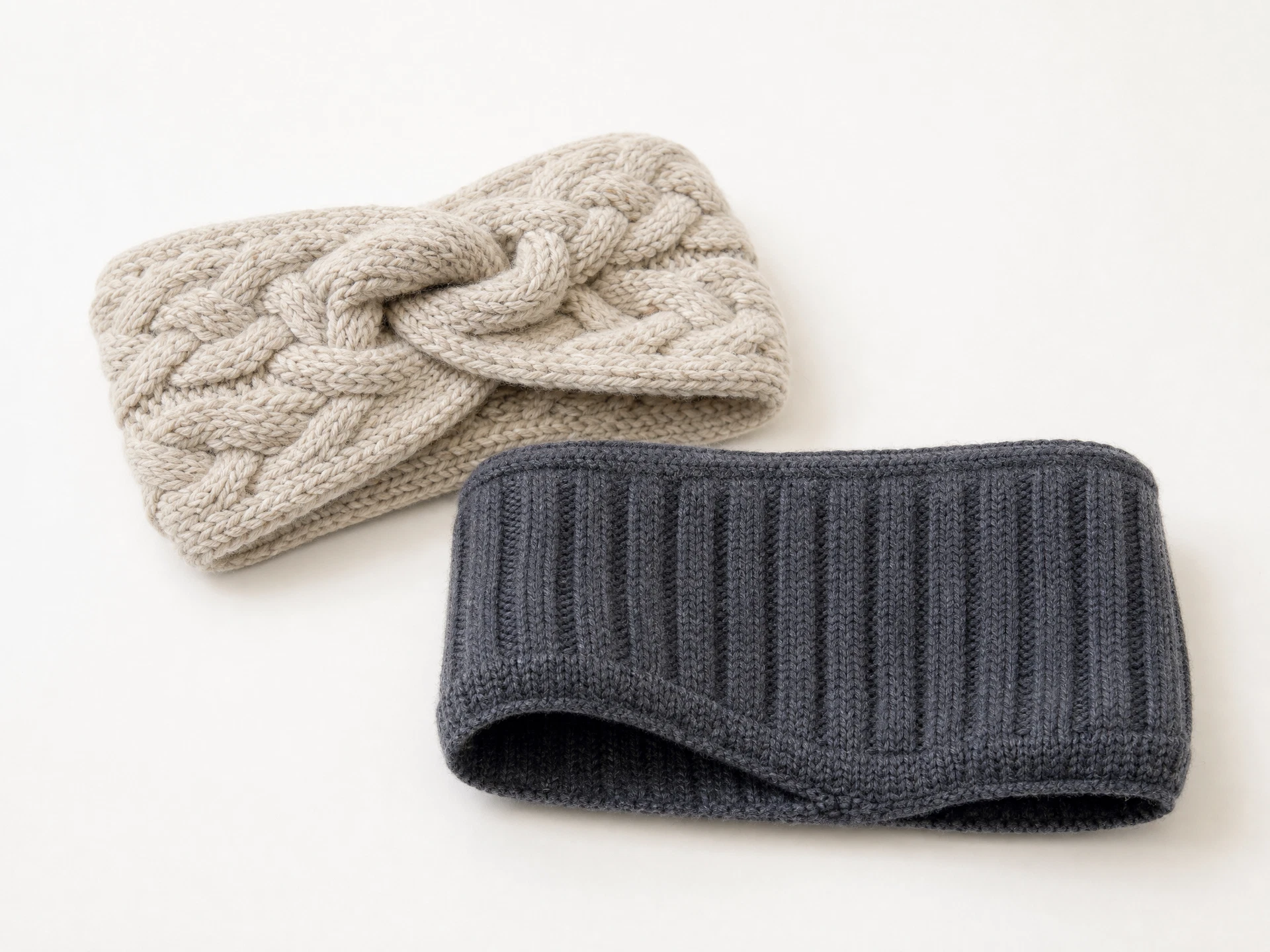
# Headband and Ear Warmer Manufacturer: A Buyer Sourcing Guide
Headbands and ear warmers can be compact, giftable additions to a winter accessory range. They are often easier to merchandise than full hats, yet still require clear decisions about fit, material, width, lining and retail presentation. Buyers can use this guide to turn a visual reference into a more practical development brief before sampling.
Hunan Tongmei Garment Co., Ltd can support buyers with product requirement discussions, sample communication, production confirmation and quality coordination for knit accessories.
Define the Role in the Collection
A headband may be designed for everyday commuting, outdoor use, premium gifting, childrens winterwear or a coordinated hat and scarf offer. The intended role affects the construction. A narrow fashion headband may prioritise a clean twist detail, while a wider ear warmer may need more coverage and an optional lining. Begin with the consumer use case rather than a single reference photo.
| Buyer decision | What to define | Why it matters |
|---|---|---|
| Product width | Narrow, medium or full ear-covering | Affects fit and warmth perception |
| Construction | Ribbed, cable, twist-front or jacquard | Determines knitting detail and sample review |
| Material direction | Wool, blend, cotton or fleece-lined option | Shapes hand feel, care and use case |
| Fit direction | Adult, childrens or stretch one-size | Guides measurement and recovery checks |
| Collection link | Standalone, gift set or matching range | Helps coordinate colour and packaging |
Choose Material and Lining for the Intended Use
Material should support the planned wearing experience. Wool and wool blends can create a warm textured appearance. Cotton options may suit lighter transitional collections. Fleece lining can add comfort for colder conditions, but it also changes thickness and stretch. Buyers should request a sample that shows the actual combined construction rather than reviewing yarn alone.
Explore related designs on the Headbands and hair accessories page.
Get Fit and Stretch Right
A headband should feel secure without creating uncomfortable pressure. The sample stage should include a review of circumference, width, twist placement and stretch recovery. If a product will be sold in multiple markets or sizes, state the intended measurement range in the brief. A fit check with more than one wearer can reveal whether the product stays in place during normal movement.
Review the Front Detail and Edges
Twist-front, knot, cable and jacquard details need to be reviewed at the finished scale. Look at the symmetry, the placement of the central feature and the way the edges sit when worn. For lined styles, check that the inner layer does not pull the outer knit or create unnecessary bulk around the seam.
Build a Matching Accessory Offer
Headbands can extend the same colour direction as hats, scarves and gloves while serving a different retail need. Buyers may choose one core yarn palette, then vary the stitch or width by product category. Review Custom knitted hats, Custom scarves and Knit gloves when planning a coordinated range.
Private Label and Packaging
Because headbands are small, the packaging should allow the product to be seen without over-compressing it. Consider card mounts, belly bands, hangtags and care labels that fit the product shape. Confirm label placement and folding method with a packing sample before bulk production.
Next Step for Buyers
Share your reference image, target user, material preference, width, colour direction and intended market through Contact our team. We can help organise the questions for a focused sample review. For childrens collections, also explore Baby accessories.
Found this sourcing guide useful? Share it with your product development, buying, or supply-chain team.