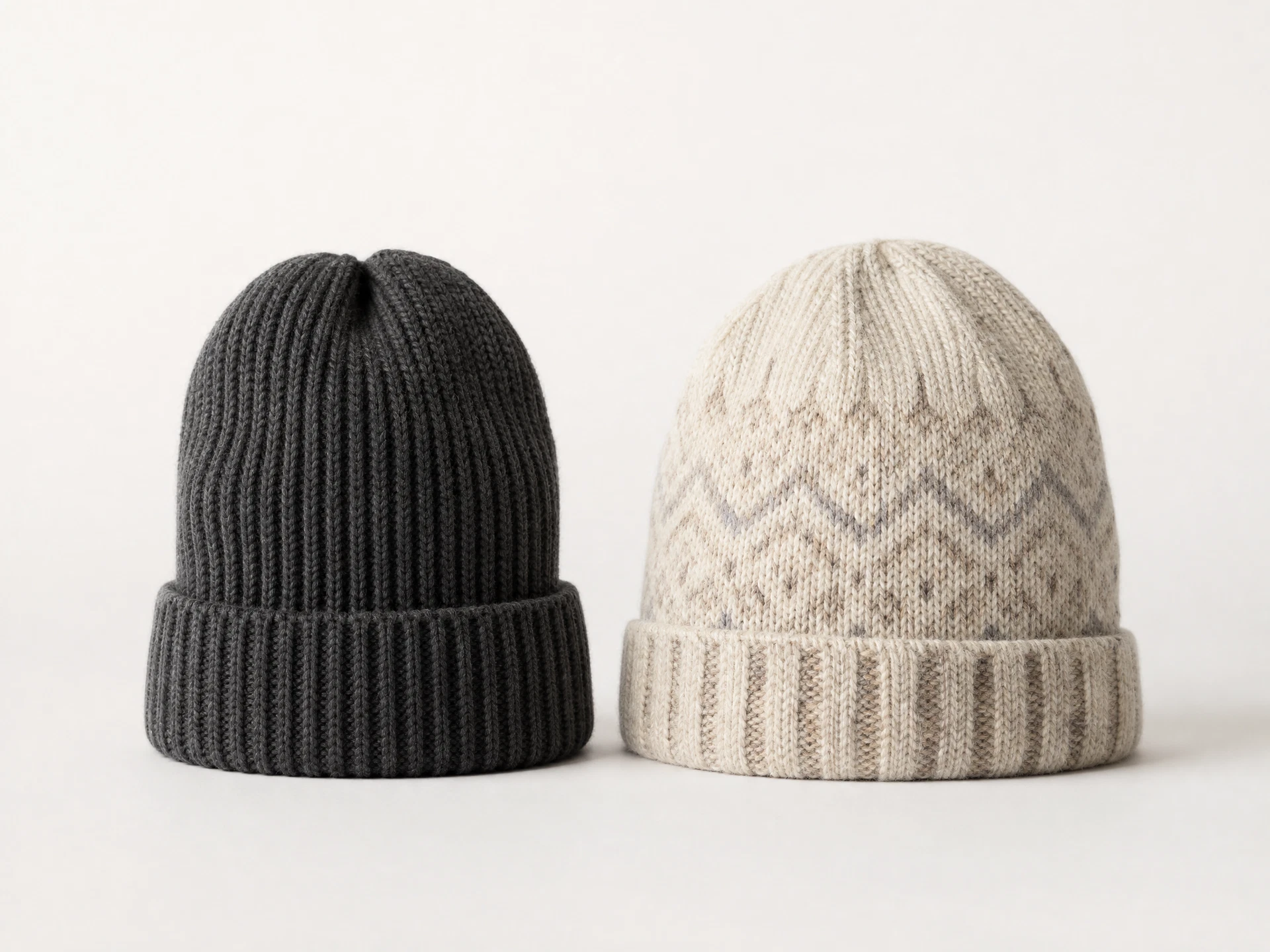
# Custom Knit Hat Manufacturer: MOQ, Materials and Sampling Guide
Choosing a custom knit hat manufacturer is not only about finding a factory that can knit a beanie. A reliable programme begins by matching the product brief to the yarn, gauge, construction, decoration method, packaging and target retail market. For buyers developing seasonal accessories, the earlier these decisions are aligned, the easier it is to compare samples and approve production with confidence.
Hunan Tongmei Garment Co., Ltd can support the early discussion around product requirements, material options, sample review and production communication. This guide helps buyers prepare a clearer brief before asking for a quotation.
Start With a Product Brief That Can Be Quoted
A useful brief identifies the customer, the season, the intended price position and the performance expectation. A chunky winter beanie, a lightweight fisherman cap and a baby pom-pom hat may all look simple, but they can require different yarn counts, knitting gauges and finishing processes. Include reference photos, a sketch or tech pack, expected size range, target colour palette and the market where the product will be sold.
| Buyer decision | What to define | Why it matters |
|---|---|---|
| Product silhouette | Cuffed, slouchy, pom-pom, balaclava or fisherman | Affects knitting construction and fit |
| Yarn direction | Wool, acrylic, cotton, blend or recycled option | Affects hand feel, care and cost structure |
| Decoration | Jacquard, embroidery, patch, label or pom-pom | Determines sampling sequence |
| Retail use | Everyday, outdoor, gift set or baby collection | Helps set performance and packaging priorities |
| Volume plan | Trial order, seasonal rollout or replenishment | Supports a realistic MOQ discussion |
Match Material to the Retail Position
Material should be selected for the consumer experience first, then tested against care requirements and supply availability. Merino wool can suit premium warmth and softness positioning. Acrylic and wool blends can support colour work and easy-care programmes. Organic fibre claims need to be planned with the exact product route and supporting documentation in mind. Buyers should confirm fibre composition, dyeing or finishing requirements, pilling expectations and care-label wording before sample approval.
For material ideas and product directions, explore Custom knitted hats.
Discuss MOQ as a Development Decision
MOQ is influenced by more than one number. Yarn colour minimums, custom labels, pom-poms, packaging, knitting setup and the number of size or colour variants all change the production plan. Instead of asking only for the lowest MOQ, share the total number of styles, colourways and expected replenishment potential. A manufacturer can then suggest ways to simplify the first run, such as combining yarn shades, using stock components or limiting the first launch to the strongest colours.
Use Sampling to Remove Risk
The sample stage should answer the questions that a product photo cannot answer. Review fit on the intended size range, stretch recovery, hand feel, cuff height, pattern placement, colour and label position. For patterned pieces, check repeat alignment and contrast. If the style includes a pom-pom, patch or embroidery, confirm the attachment method and wash expectations. Record changes in a single approval sheet so the production team works from one version of the brief.
Build a Pre-Production Checklist
Before bulk production, buyers should confirm the approved sample, final composition, measurement tolerance, colour standard, packaging method and inspection expectations. It is also useful to decide what photos or records will be needed during production for internal quality review. Hunan Tongmei Garment Co., Ltd can discuss these checkpoints with buyers before production begins.
Private Label Details That Buyers Often Miss
A well-planned private-label hat includes more than a woven label. Consider hangtag location, care label content, country-of-origin marking, barcode placement, polybag requirements and how a hat should be folded or shaped for retail display. The packaging should protect the product without flattening the knit structure or damaging decorative details.
Next Step for Buyers
Send your target product photo, material direction, market, colour count and estimated quantity to Contact our team. We can help convert the idea into the development questions needed for a practical sample plan. For coordinated collections, also review Custom scarves and Knit gloves.
Found this sourcing guide useful? Share it with your product development, buying, or supply-chain team.